Sketch Sprint Strategy: How to Win
Sketch Sprint rewards speed on both sides of the pen. These tips cover picking a word, drawing it so people get it fast, guessing early and how the points add up.
The one thing that matters most
Most of your points come from guessing, not drawing. A quick right guess is worth up to 100, plus 20 if you are first. A whole turn of drawing is worth 50 at most.
So the player who guesses early, and often, usually wins. Wrong guesses cost nothing. Type what you see the moment you have an idea, and keep typing.
How the points add up
A right guess starts at 100 and falls steadily to 30 by the end of the turn. On an 80 second turn, that is a little under 1 point a second. Getting it at 20 seconds is worth 83; at 40 seconds, 65; at 60 seconds, 48.
Being first is worth 20 more. On an 80 second turn, that bonus is worth about as much as 20 seconds of speed, so a fast guess that also lands first is a big swing.
The drawer scores for each player who gets the word, no matter when. It is 50 shared across everyone guessing, capped at 25 for each right guess. With two guessers, each one is worth 25 to you. With five, each is worth 10. Either way, if everyone gets it, you score 50.
Picking easy, medium or hard
You have 12 seconds to choose. The level does not change your points. What matters is how many people get your word, because that is all the drawer scores on.
- If you are unsure, pick the word you can draw best. A word nobody gets scores you 0.
- Easy words get guessed fast, so your guessers score high too. That is fine early in the game.
- In a close game near the end, a medium or hard word that people still get, but later, can earn you the same 50 while your rivals score less for it. Only try this if you are sure you can draw it.
- Hard words are often scenes or actions, like “birthday party” or “thunderstorm”. They need more strokes, so they suit the longer 100 second turns.
- Do not run out the 12 seconds. A word picked for you might be one you cannot draw.
Drawing for speed
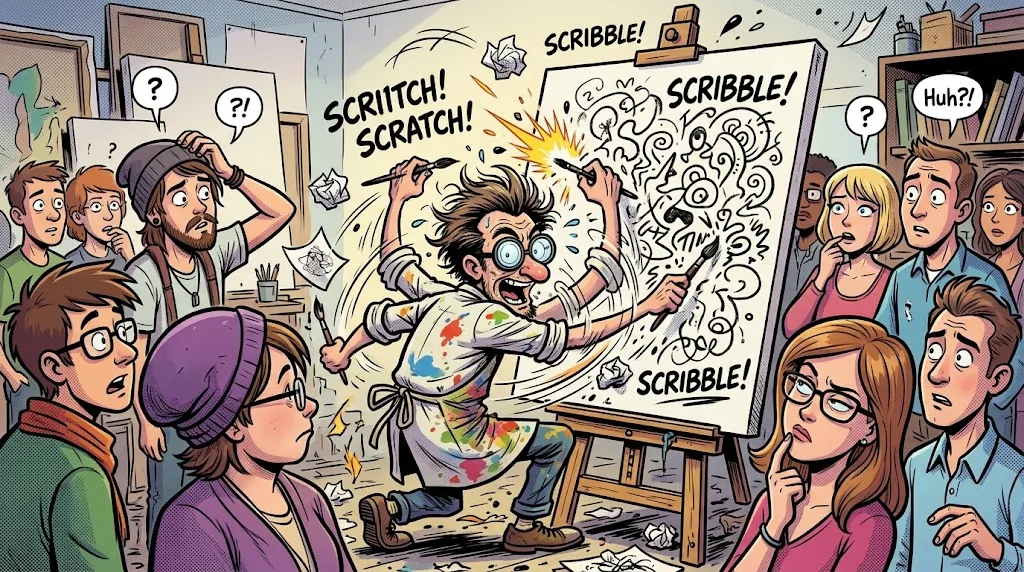
Your guessers see every stroke as you draw it, so the order you draw in matters. Each second they wait costs them points, and a slow start can mean nobody gets it at all.
- Outline first. Start with the big shape in the thick pen so people have something to guess within seconds.
- Then add the one feature that names it: the trunk on an elephant, the long neck on a giraffe, the stripes on a zebra, the hole in a doughnut.
- Use color that names the thing. Yellow for a banana, orange for a carrot, blue for water, brown for a tree trunk.
- Draw big. Fill the page so details are easy to see on a small phone.
- For a scene, draw the one object that tells the story. A cake with candles says “birthday party” faster than a room full of people.
- Watch the wrong guesses as they pop up. If people say “dog” for your cat, add whiskers and pointy ears. If they are close, keep drawing what you have.
- Use Undo for a bad stroke. Use Clear only if the drawing is leading everyone the wrong way.
- No letters or numbers. Arrows and simple symbols, like a heart or lines to show movement, are fine.
Guessing tips
- Count the blanks. The number of letters cuts the list fast. Spaces and hyphens show from the start, so you know when it is two words.
- Guess early, even if you are not sure. A wrong guess costs nothing, and points fall every second.
- Guess the general thing first, then narrow it. “Bird” then “owl” then “parrot”.
- Read the other wrong guesses. They show you what it is not.
- Use the hints. One letter fills in at half time and a second at three-quarters time, but never more than half the word.
- “So close!” means you nearly have it: one letter off, the word inside a longer guess, or most of the start. Your guess stays in the box, so fix it rather than starting again.
- Do not worry about the small stuff. Capitals, spaces, “a” or “the” and plurals do not matter, so “cats” is right for “cat”.
- Think about the word list. Every word is an everyday thing: animals, food, things at home, nature, transport and more.
Common mistakes
- Waiting until you are sure before you guess. By then it is worth far less.
- Drawing small details before the main shape, so guessers have nothing to go on.
- Picking a hard word you cannot draw. If nobody gets it, you score nothing.
- Ignoring the wrong guesses while you draw. They tell you what to fix.
- Retyping a “So close!” guess from scratch instead of fixing one letter.
- Letting the 12 second pick run out.
Playing with bots
With fewer than 3 people, bots fill the seats up to 3. The host can set each one to easy, medium or hard.
Bots do not look at your drawing. They make a wrong guess or two from words like the answer, then get it at some point in the turn. So you cannot help a bot get it faster, but you also cannot lose its points to a bad drawing.
Beating bots comes down to guessing early. Hard bots get it sooner, so you need to be quick to be first. When it is a bot’s turn to draw, its drawing often comes from one a person made, so guess as you would for a person.
If everyone left guessing is a bot, the turn ends 3 seconds later, so nobody waits for them.
Playing with kids and groups
- Set the time to 100 seconds for young drawers.
- Tell kids to pick the easy word. Easy words score the drawer just as much.
- Let a grown-up type for a kid who cannot spell fast yet. Small typos often still get “So close!”.
- Set bots to easy so kids can beat them.
- With a big group, each right guess is worth less to the drawer, but more people guessing means someone gets it sooner.
- Put the game on a TV at joinme.games/watch so the room can watch the drawing and the wrong guesses together.
Quick tips
- Guess early and often. Wrong guesses are free.
- Draw the outline first, then the one feature that names it.
- Pick the word you can draw best, not the hardest one.
- Count the blanks and watch for hint letters at half and three-quarters time.
- “So close!” means fix it, not start over.
Questions
- How do you win at Sketch Sprint?
- Guess early and often, since a quick right guess is worth up to 100 plus 20 for being first, and wrong guesses cost nothing. When you draw, pick a word you can draw well and start with the outline so people get it fast.
- Should I pick the easy or hard word?
- Hard words are not worth more points. The drawer scores only for how many people get the word, so pick the one you can draw best. Late in a close game, a harder word people get later can score you the same while your rivals score less.
- How do you draw fast in a drawing game?
- Draw the big outline first, then the one feature that names the thing, like a trunk or stripes. Use color that matches, draw big, and skip the background. Watch the wrong guesses and fix what they miss.
- What are good tips for drawing and guessing games?
- When guessing, count the letters, guess the general thing first and narrow it down, and read other players’ wrong guesses. When drawing, go for the shape people recognize, not a pretty picture.
- What does “So close!” mean in Sketch Sprint?
- Your guess is nearly right: one letter off, or two for a long word, the word inside a longer guess, or most of the start of the word. Only you see it, and your guess stays in the box so you can fix it.